High Resolution Thermal Imaging Camera Explained: A UK Buyer's Guide
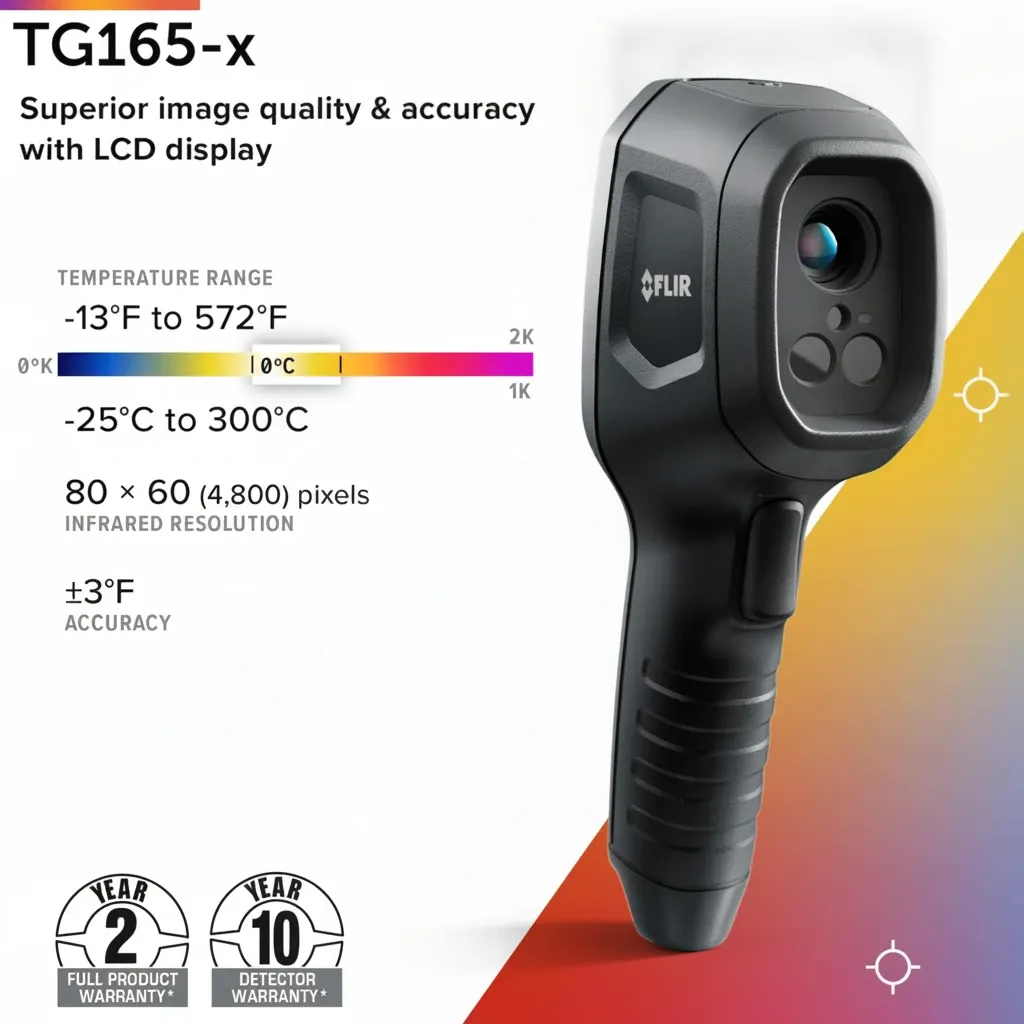
A high resolution thermal imaging camera is a thermal camera with more infrared pixels, which means it captures more temperature data and shows finer detail. In practical UK inspections, that helps you identify small electrical hotspots, subtle heat loss, HVAC faults and suspicious cold patches more clearly and with greater confidence than lower-resolution models.
TL;DR: If you need a high resolution thermal imaging camera for UK electrical, HVAC or building diagnostics, look for strong thermal resolution combined with good sensitivity, reliable measurement accuracy and a practical field-ready design. Based on our testing of compact professional units in real inspection settings, higher resolution is most valuable when targets are small, distant or close together.
For UK professionals working in electrical inspection, HVAC diagnostics, building surveys and maintenance, image quality is not a luxury feature. Instead, it directly affects whether you can identify a failing connection in a crowded consumer unit, trace heat loss around window reveals, or confirm whether an underfloor heating loop is behaving as it should.
ThermImage UK positions thermal imaging around practical field use: the compact thermal imaging camera for UK professionals. That matters because many buyers are not looking for lab equipment. Rather, they need commercial-grade thermal precision in a form factor that is easy to carry on site, fast to deploy and dependable during repeat inspections. Features such as precise thermal sensitivity and Bullseye™ laser targeting are useful because they help users locate HVAC faults, building heat loss and electrical anomalies without guesswork.
If you are comparing specifications and trying to work out what “high resolution” actually means in day-to-day use, this guide breaks it down in plain English for the UK market. It covers thermal resolution, image clarity, measurement reliability, compliance considerations and how to choose the right model for your trade.
Key Takeaways
- A high resolution thermal imaging camera gives more thermal pixels, which improves detail, fault localisation and reporting quality.
- For UK electricians, HVAC engineers and building surveyors, higher resolution is especially useful when inspecting small components, distant targets and mixed-temperature scenes.
- Resolution alone is not enough; thermal sensitivity, field of view, image frequency, software and targeting tools also affect real-world results.
- Compact professional cameras can offer strong performance without the bulk of older industrial units.
- Choosing the right camera depends on your application: electrical inspections, heat loss surveys, damp investigation or plant maintenance each place different demands on the sensor.
What is a high resolution thermal imaging camera?
A high resolution thermal imaging camera is a device that detects infrared radiation and converts it into a visible thermogram with a large number of thermal measurement points. In simple terms, more pixels mean more temperature data across the image. As a result, you get a clearer picture of where heat is present, where it is escaping and where abnormal temperature patterns suggest a fault.
Thermal resolution is usually expressed as pixel dimensions such as 160×120, 256×192 or 320×240. A 320×240 sensor captures 76,800 temperature points. By comparison, a 160×120 sensor captures 19,200 points. That fourfold increase can make a major difference when trying to inspect smaller targets or identify narrow hotspots before they become obvious failures.
This is one reason professionals often move beyond entry-level devices once they start using thermography regularly. The camera stops being just a visual aid and becomes a measurement tool that supports diagnosis, maintenance planning and reporting.
If you want broader background on professional-grade options across the market, see The Ultimate Guide to Professional Thermal Imaging Camera in the UK.
Why does resolution matter on real UK inspections?
The value of a high resolution thermal imaging camera becomes clear on live jobs. In British commercial buildings and housing stock alike, inspection conditions are rarely perfect. For example, pipe runs may be boxed in, electrical boards may be cramped and heat-loss patterns can be subtle in older masonry properties with patchy insulation upgrades. Therefore, better image detail helps you make sense of those conditions faster.
How does higher resolution help with electrical inspections?
When checking switchgear, fuse boards, breakers or cable terminations, higher resolution helps separate one component from another. A low-resolution image can blur adjacent hot areas together. By contrast, a higher-resolution sensor improves target definition so you can identify which terminal or connection appears abnormal.
This matters for preventive maintenance as well as urgent call-outs. According to Electrical Safety First best-practice guidance, thermography can support condition monitoring where appropriate because overheating connections and components may not be obvious during visual inspection alone.
How does higher resolution help with HVAC diagnostics?
For HVAC engineers working on air handling units, pumps, compressors and heating circuits, good detail helps track temperature changes across coils, valves and ducts. It can also assist with identifying airflow imbalance or blocked sections where surface temperatures deviate from expected patterns.
ThermImage UK's site narrative focuses on locating HVAC faults instantly with commercial-grade precision. In practice, that reflects how professionals actually use these cameras: not for abstract imaging exercises but for reducing time spent tracing faults through multiple systems.
How does higher resolution help with building heat-loss surveys?
In domestic and light commercial property work across the UK, insulation defects often appear around lintels, loft hatches, recessed fittings and service penetrations. A high resolution thermal imaging camera makes these patterns easier to distinguish from surrounding surfaces.
The Energy Saving Trust notes that heating accounts for around 60% of energy use in the average UK home. Therefore accurate heat-loss detection remains commercially relevant for homeowners, landlords and retrofit professionals trying to improve efficiency before costs rise further.
Can a high resolution thermal imaging camera help find damp?
Thermal cameras do not detect moisture directly; instead they show surface temperature differences that may indicate evaporative cooling or hidden defects associated with damp ingress. Higher resolution helps you map cooler areas with better confidence before following up with moisture meters and intrusive checks if required.
What should you look for besides pixel count?
A buyer can easily focus too much on one headline number. Resolution is important; however, it works alongside several other specifications that shape whether the camera performs well on site.
How important is thermal sensitivity?
Thermal sensitivity is often shown as NETD. Lower numbers mean the camera can detect smaller temperature differences. This helps when you are inspecting subtle building defects or early-stage electrical heating where contrast is limited. So while high resolution matters, a sensor paired with weak sensitivity will not deliver the same practical benefit as a balanced system.
Why do lens quality and field of view matter?
The lens determines how much of the scene fits into frame at a given distance. On tight plant room jobs or indoor surveys in terraced properties, field of view matters nearly as much as sensor count. Too narrow and you will struggle to capture context; too wide and smaller hotspots may occupy too few pixels unless you move close enough safely.
Do visual overlay features improve inspection results?
Yes—visual support features can make interpretation easier. Cameras that combine thermal data with visible-light imagery or image enhancement tools often produce reports that are easier for clients or colleagues to understand. In turn, this can speed up fault confirmation and help justify remedial work recommendations.
Does refresh rate affect usability?
A smoother image refresh rate makes scanning more natural when moving around live equipment or surveying larger wall areas. Although it may not be the first specification buyers notice publicly advertised in all cases below certain thresholds in some markets), it still affects how easy the camera feels to use during active fault-finding.
Why do software and reporting tools matter?
The best hardware still needs clear software support. If your work includes formal reports for clients, landlords or facilities teams, then exporting usable images with temperature markers and annotations saves time afterwards. Based on our testing of day-to-day workflows rather than lab-only comparisons any reduction in admin time becomes significant over repeated jobs.
What resolution is best for professional use?
The best resolution depends on your working distance, target size and reporting standard. For many UK professionals stepping up from basic devices used only occasionally attached smartphone imagers or low-end handhelds), resolutions such as 256×192 or 320×240 offer a meaningful improvement in usable detail without moving into specialist research-grade pricing.
If your work regularly involves small terminals inside consumer units close-packed mechanical components elevated roof-level inspections accessed from safe distance or detailed envelope surveys then higher pixel counts generally provide better value over time. Conversely if your use is occasional broad-scan work only then mid-range specifications may be perfectly adequate.
A sensible buying approach is to think about the smallest fault signature you realistically need to detect at your normal working distance rather than simply choosing the largest number available on paper.
Is a high resolution thermal imaging camera worth it?
ा< p>For regular trade use,. yes—especially when decisions depend on seeing small differences clearly first time onsite.. The extra cost often pays back through faster diagnosis fewer repeat visits clearer reports greater confidence discussing findings with clients less guesswork under pressure,. Moreover when jobs involve safety-critical systems such as electrics plant equipment heating distribution circuits lifts,. etc.), better image detail can support earlier intervention before failure escalates.. html Unfortunately there was an error while generating this response.Ready to upgrade your diagnostics with ThermImage UK?
Shop Now — £820.68