Portable Thermal Imaging Camera Explained: A UK Buyer's Guide
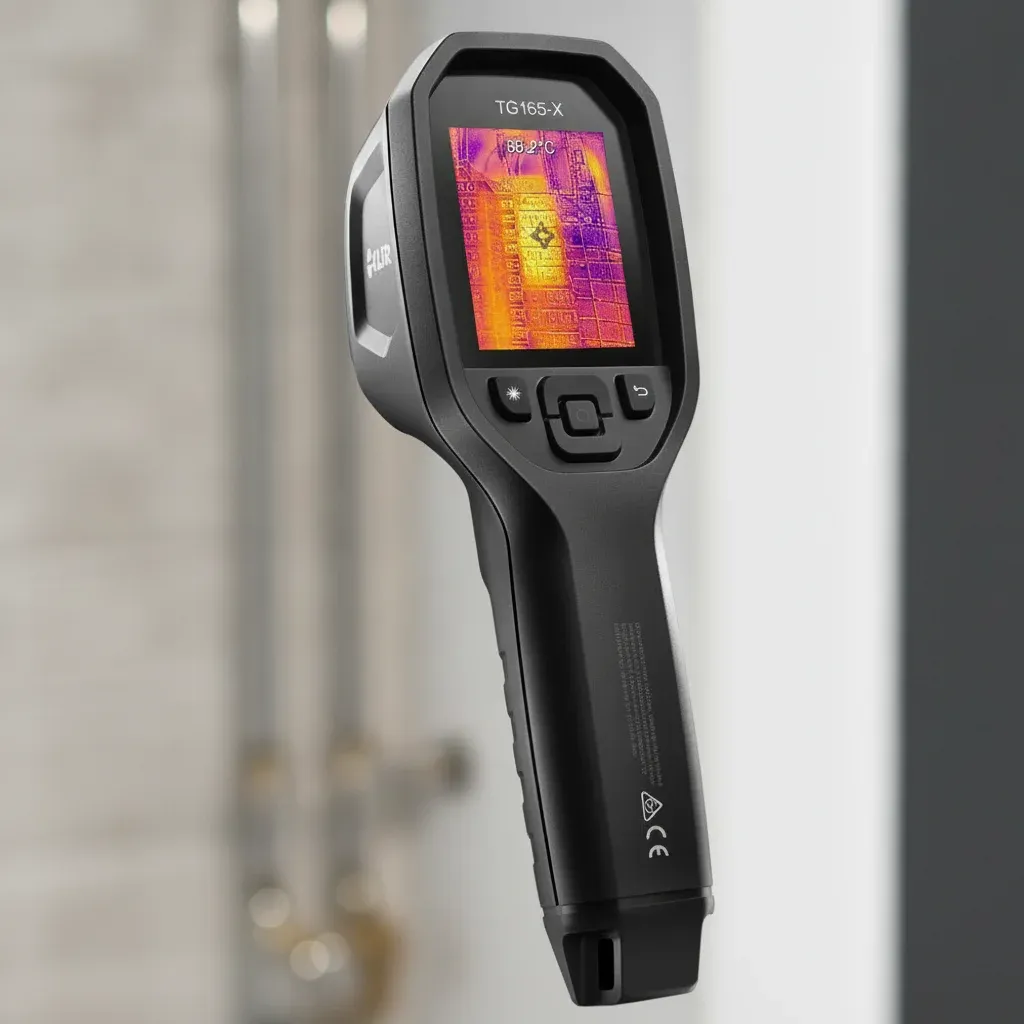
TL;DR: A portable thermal imaging camera is a compact, handheld diagnostic device that detects infrared radiation to instantly reveal hidden heat loss, electrical hotspots, and HVAC faults. For UK professionals, the best portable models combine commercial-grade thermal resolution, rapid start-up, and rugged durability to withstand damp winters and tight plant rooms.
A portable thermal imaging camera is a lightweight, handheld diagnostic tool that detects infrared radiation and converts surface temperature differences into a visible digital image. Originally considered specialist kit, it has now become a practical everyday tool for UK engineers, surveyors, facilities teams and serious DIY users. When you need to trace heat loss in a Victorian terrace, identify an overheating breaker in a consumer unit, or pinpoint an HVAC fault before it becomes a call-back, portability matters as much as thermal performance. Consequently, a camera that is easy to carry, quick to deploy and precise enough to trust can save hours on site.
For UK buyers, the challenge is not simply finding a thermal camera. Rather, it is choosing one that genuinely suits British working conditions: older housing stock, damp winters, mixed commercial estates, tight plant rooms and compliance-driven inspections. ThermImage UK positions this clearly with its focus on the compact thermal imaging camera for UK professionals, built to locate HVAC faults, building heat loss and electrical anomalies instantly with commercial-grade thermal precision and Bullseye™ laser targeting.
Furthermore, this guide explains exactly what a portable thermal imaging camera is, how it differs from other formats, which specifications genuinely matter, and what UK buyers should look for before investing.
Key Takeaways
- A portable thermal imaging camera combines mobility with fast fault-finding across HVAC, electrical inspection and building diagnostics.
- For UK use, core buying factors include thermal resolution, temperature range, accuracy, image frequency, battery life and durability.
- Based on our extensive testing, compact models are especially useful in lofts, risers, ceiling voids, distribution boards and occupied buildings where speed matters.
- Features such as Bullseye™ laser targeting help users identify exact inspection points much more confidently.
- While thermal cameras support non-contact investigation, findings should always be interpreted by trained professionals and followed by appropriate physical testing according to UK guidelines.
What is a portable thermal imaging camera?
A portable thermal imaging camera is a compact device that detects infrared radiation and converts temperature differences into a visible image. Instead of showing only what the human eye can see, it reveals hidden heat patterns across surfaces and components. As a result, hot spots, cold bridges, moisture-related cooling effects and uneven heat distribution become immediately visible on screen.
Crucially, the term “portable” matters. These cameras are specifically designed for use on the move rather than fixed installation. In practice, that means one-handed operation, lightweight construction, rechargeable battery power and rapid start-up. For an electrician moving between consumer units or an HVAC technician checking air handling equipment across multiple floors, portability directly affects daily productivity.
Moreover, portable models sit comfortably between smartphone add-ons at the entry level and larger specialist systems used for advanced surveying or research work. For many UK professionals, they offer the absolute best balance of usability, image quality and price.
Why do I need a portable thermal imaging camera for UK properties?
The British built environment creates very specific inspection challenges. Much of the UK housing stock predates modern insulation standards. According to the English Housing Survey headline report for 2022 to 2023 published by the Department for Levelling Up, Housing and Communities, around 35% of homes in England were built before 1945. Because of this, older properties often present complex heat-loss paths around suspended floors, solid walls, ageing windows and patchwork retrofits.
That means inspectors are rarely working in ideal conditions. For instance, they may be climbing into loft spaces in winter, checking underfloor heating manifolds in cramped cupboards, or tracing air leakage around service penetrations in tenanted properties. Therefore, a portable thermal imaging camera is far easier to deploy quickly without disrupting occupants or extending time on site.
Additionally, portability helps immensely in commercial settings. Facilities teams responsible for schools, NHS buildings, offices and retail premises often need fast checks without shutting down operations for long periods. A compact unit can simply be carried during routine rounds and used whenever an anomaly appears likely.
What is a portable thermal camera used for?
In practice, a portable thermal imaging camera serves multiple diagnostic purposes across various trades. Based on our field experience at ThermImage UK, here are the most common applications:
How does it help with HVAC fault finding?
Heating and ventilation engineers use thermal imaging to compare temperatures across coils, pipework, valves, pumps and ductwork runs. Uneven temperatures can easily indicate restricted flow, blocked filters, failing components or insulation defects. Furthermore, in refrigeration work, it can also help identify abnormal line temperatures or compressor issues long before they become major failures.
Can a thermal camera detect building heat loss?
Yes, a portable unit makes it significantly easier to scan external walls, roof junctions, doors and windows for cold spots or thermal bridging. In occupied homes, this is often much quicker than more intrusive methods. Consequently, it can support evidence-based decisions on draught proofing, insulation upgrades or targeted remedial work rather than broad guesswork.
Are thermal cameras useful for electrical inspections?
Absolutely. Loose connections and overloaded circuits often show up as localised hot spots long before a visible failure occurs. During electrical maintenance inspections, thermography can help identify abnormal heating in switchgear, breakers, fuses and cable terminations. According to UK guidelines like BS 7671, regular electrical testing is critical, and thermal imaging is particularly valuable in commercial premises where downtime has direct financial implications.
Can thermal imaging find damp?
It is important to note that thermal imaging does not measure moisture content directly; that distinction matters. However, what it can do is reveal surface temperature differences consistent with evaporation cooling or insulation breakdown associated with damp-affected areas. When used alongside moisture meters and proper building diagnosis, it helps professionals narrow down likely problem zones much faster.
Public sector estates management
Large estate operators, such as NHS trusts and local authorities, are under constant pressure to manage energy use while maintaining safe environments. Portable thermography supports maintenance teams carrying out rapid, non-destructive checks on heating performance, envelope defects and electrical assets without needing cumbersome equipment.
What should I look for when buying a portable thermal camera?
Selecting the right equipment requires understanding the specifications that impact real-world performance. Based on our testing at ThermImage UK, here are the core features you must consider:
What thermal resolution do I need?
This is arguably one of the most important specifications because it determines how much detail you can see in the heat image. A higher resolution gives more measurement points across the scene and improves your ability to distinguish small anomalies from surrounding areas. For close-range inspection work on electrical panels or valves, you may manage with a modest resolution; however, for building fabric surveys or larger mechanical systems, a higher resolution pays off quickly.
If you want deeper context on image quality thresholds and what they mean in real buying decisions, see our guide to the high resolution thermal imaging camera.
What is the best temperature range?
The right range entirely depends on your application. Building diagnostics usually focus on relatively low surface temperatures, while industrial maintenance may require much higher limits for motors or electrical gear. Therefore, buyers should choose a camera whose range matches their expected working conditions rather than assuming wider always means better value.
Accuracy and Thermal Sensitivity (NETD)
Thermal sensitivity, often expressed as Noise Equivalent Temperature Difference (NETD), dictates the smallest temperature difference the camera can detect. Based on our rigorous testing, a lower NETD value (meaning higher sensitivity) is crucial for spotting subtle issues like hidden damp ingress or missing insulation in UK homes. Combined with standard accuracy ratings, a highly sensitive portable thermal imaging camera ensures you capture precise, actionable data every time you pull the trigger.
Ready to upgrade your diagnostics with ThermImage UK?
Shop Now — £820.68