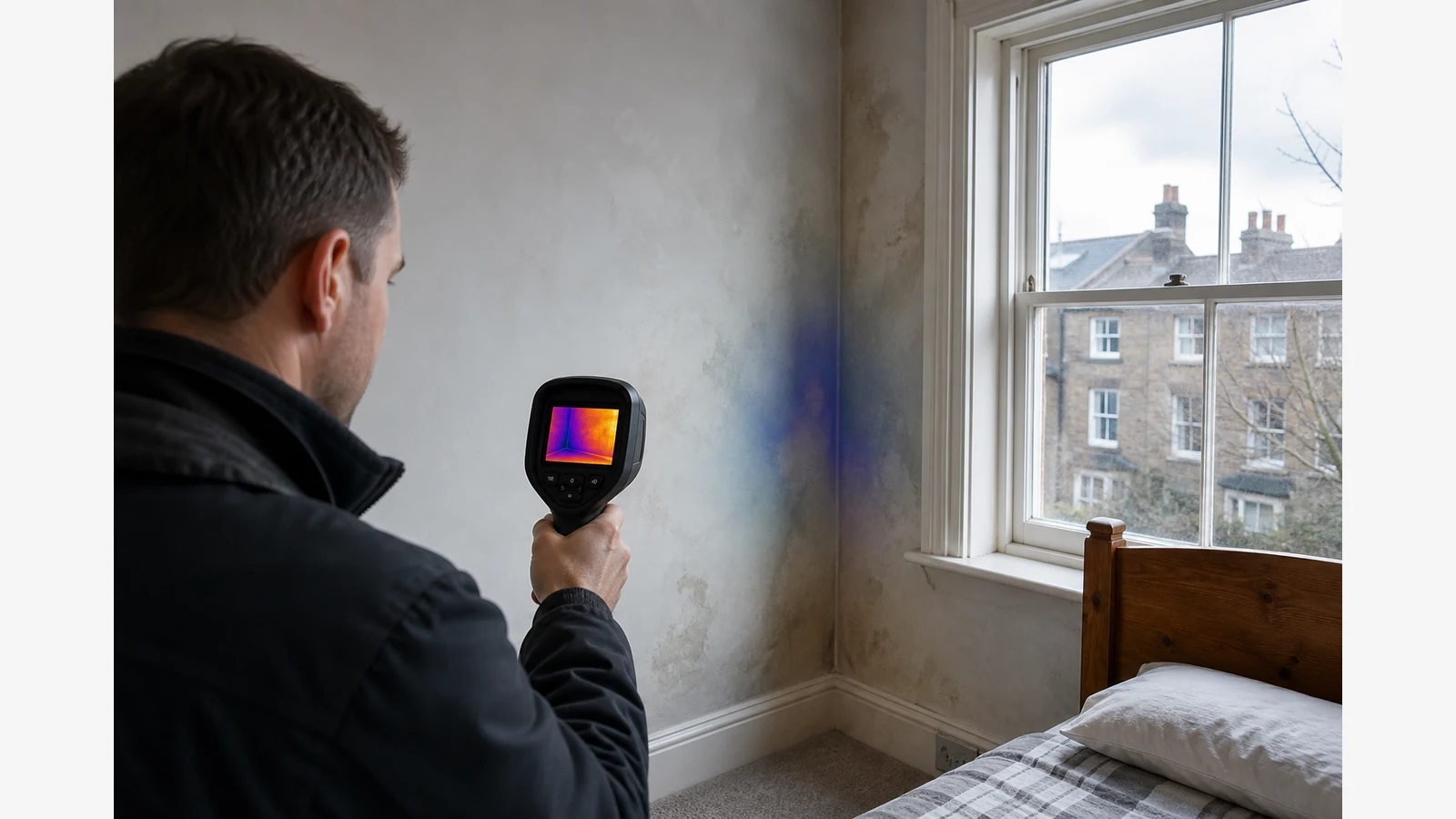
Thermal camera for damp and mould UK: what it can and cannot prove
A thermal camera for damp and mould in UK homes finds cooler surface patches that often sit alongside moisture or cold building fabric. It does not read humidity percentage, prove rising damp on its own, or replace a moisture meter and survey judgement.
What thermal imaging can show — and what it cannot
Property-care guidance explains that thermal imaging helps locate colder damp-related surfaces, including patterns linked to evaporative cooling, as an aid beside professional judgement (Rentokil Property Care on thermal imaging and damp). UK survey explainers stress the same limit: cameras do not measure moisture content directly, and cold patches need contextual follow-up (Survey Merchant thermal imaging survey guide).
That distinction matters when tenants or buyers see recurring mould after decorating. Landlords and surveyors need non-invasive clues before opening walls — thermal stills are clues, not a courtroom diagnosis.
A practical diagnostic ladder
- Create useful indoor/outdoor temperature difference with heating on where appropriate.
- Scan for cold anomalies at corners, window reveals, external walls and ceiling junctions.
- Corroborate with a moisture meter, visual mould or staining, ventilation notes and construction context.
- Decide remediation versus ventilation or insulation works only after patterns agree.
Cold bridges can look similar to damp-related cooling. Cross-check with our guide to cold bridge spotting with thermal imaging before you label a patch as moisture.
Conditions checklist for usable damp scans
- Useful temperature difference between indoors and outdoors.
- Heating on long enough for fabric to show contrast.
- Avoid sun-loaded elevations that mask or invent patterns.
- Capture repeatable viewpoints for reports and re-checks.
When not to rely on thermal alone
Legal damp disputes, invasive timber decay checks and formal expert reports need specialist surveys beyond a trade screening camera. Resolution choices for survey packs are covered in the resolution guide for UK trades; buying the highest resolution first rarely fixes a weak evidence process.
Build a simple evidence pack
Prefer a repeatable pack — thermal stills, moisture readings, notes on heating and weather, and photos of staining — over a single colourful image. For related heat-loss context on UK housing fabric, see the existing heat loss survey thermal camera UK guide.
Next step
Use thermal imaging as a screening and communication tool, then corroborate. If damp and mould checks are seasonal rather than weekly, weigh ownership against hire using the hire versus buy checklist before you commit to kit.