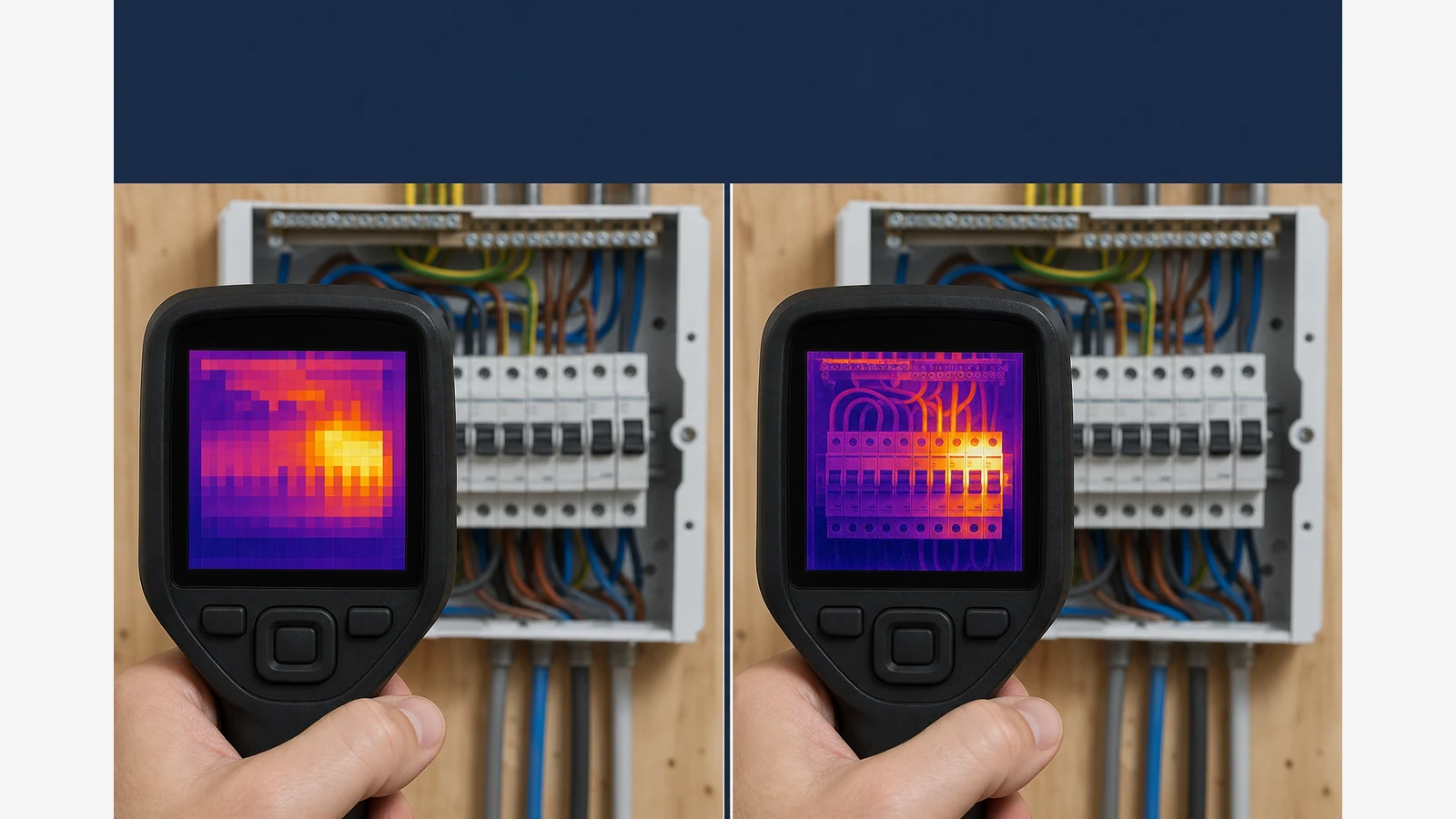
Thermal camera resolution guide UK: when 160×120 is enough
Thermal camera resolution for UK trades means IR detector resolution — how many temperature points the sensor captures — not the megapixels on the display. Marketing “enhanced” figures and image blending are not the same as native IR resolution.
Detector resolution versus display resolution
UK buying guidance distinguishes thermal detector resolution from display resolution and explains why pixel count drives measurable detail (Tester.co.uk thermal imaging buying guide). Manufacturer education likewise notes that higher IR resolution improves detail and measurement confidence as distance to the target increases (Teledyne FLIR thermal camera specs overview).
Practical resolution bands for common trade jobs
| True IR band (typical) | Often suitable for | Watch-outs |
|---|---|---|
| Around 80×60 | Very coarse spot checks | Usually too coarse for dense UFH or fine fabric reporting |
| Around 160×120 | Close-range electrical, HVAC and many domestic diagnostics | May struggle at distance or on dense pipe layouts |
| Around 320×240 | Detailed building fabric reporting and finer edges | Higher cost; confirm you need the detail weekly |
A 2026 UK trade guide states 160×120 is commonly the minimum useful resolution for professional diagnostics, with 320×240 preferred for detailed building surveys (Nearby Traders 2026 guide). Treat those bands as decision aids, not a single “best” resolution for every trade.
Comparison path: pick by farthest small target
- Close-range consumer-unit or HVAC spot checks often work at 160×120 when you can get near the target.
- Dense underfloor heating and thick coverings need enough pixels to separate loops — see the UFH tracing guide.
- Client report packs for fabric, damp screening context or cold bridges may justify stepping up — pair with cold bridge thermal imaging and damp and mould limits.
For handheld form-factor context already on this site, the handheld thermal imaging camera buyers guide and high-resolution thermal imaging explainer remain useful companion reading.
Who should upgrade
Upgrade when your weekly work involves longer working distance, dense UFH, or report packs that need finer edge detail. Do not confuse image blending overlays with native IR resolution.
Next step
Choose true IR resolution for the farthest small target you must resolve every week. If ownership only makes sense after that match, compare a compact trade example on the FLIR TG165-X detail page, or weigh hire first via hire versus buy.